Punta Cana and Cap Cana: One Address Inside the Other
Both names get typed into the same search box for a reason: brochures use "Punta Cana" for a stretch of coast the size of a county and "Cap Cana" for something inside it, and almost nobody spells out which is which. The distinction stops being trivia at the moment of purchase, because one of the two words names a destination and the other names a specific community with a perimeter, its own roads and its own rules. Bonita sits inside Cap Cana, which sits inside Punta Cana. Here is what each of those lines is actually doing.
So is Cap Cana part of Punta Cana, or somewhere else entirely?
Part of it. Punta Cana is the destination at the eastern tip of the Dominican Republic, in the province of La Altagracia, and it is the name the airport carries — Punta Cana International Airport, PUJ. Cap Cana is one of the communities within that destination: a planned development with controlled entry points and its own internal road network, not a separate town you would fly into differently.
For a buyer the two names stack rather than compete. A residence at Bonita is in Cap Cana, in Punta Cana, in La Altagracia, in the Dominican Republic, and every one of those lines is true on the same title at the same time. Distances behave accordingly: PUJ is roughly a 10 minute drive from Bonita, and Juanillo Beach, on Cap Cana's own shoreline, about five.
How much ground does the word "Punta Cana" actually cover?
More than most first-time buyers picture. In its 2025 tourism-flow report, the Banco Central de la República Dominicana counted 5,275,492 arrivals by foreign non-residents entering the country through Punta Cana International Airport, which the same report puts at 71.9% of the national total. This is the country's principal doorway, not a single resort strip.
That is why one label ends up describing a beachfront residence and an apartment a half-hour inland with equal enthusiasm. The word is accurate in both cases and useful in neither, which is precisely the gap a second name like Cap Cana is doing the work of closing.
What genuinely changes once you are through the gate?
Practical, checkable things rather than atmosphere. Entry is controlled, so the roads inside carry residents, their guests and staff instead of through traffic. Landscaping, roadway upkeep and utilities within the perimeter are handled as one system by the community, rather than parcel by parcel by whoever owns the frontage. And the amenities tend to belong either to the community or to a named project inside it, instead of being shared public frontage.
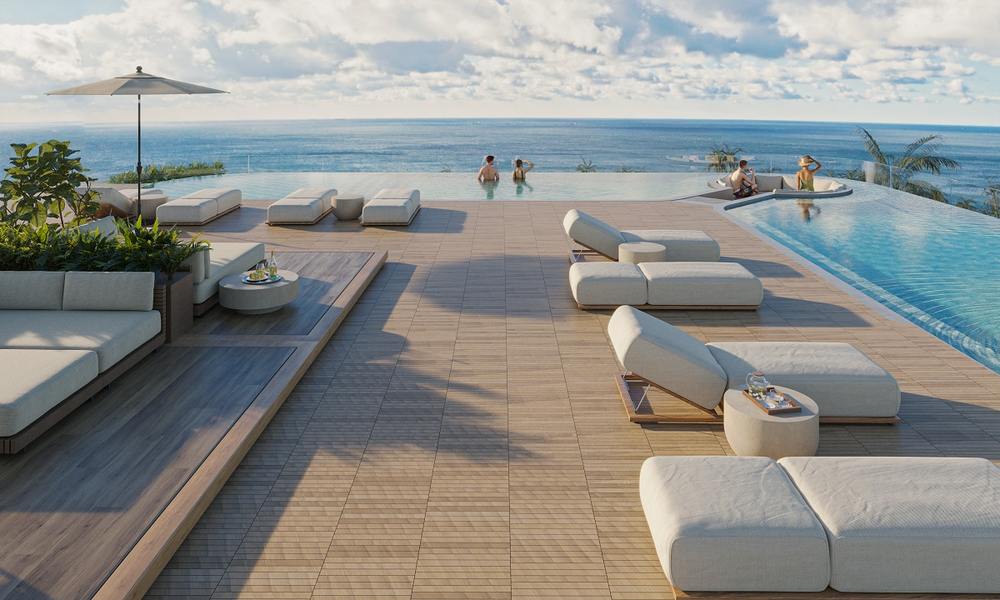
At Bonita the second of those layers is the project's own: gated 24/7 security, a beachfront that belongs to the development, and a 161,000 sq ft crystalline lagoon with its own sand beach running through the middle of the community. What none of this is, is a claim about crime. No government assigns Punta Cana, or any community inside it, a risk level different from the national one, so read a gate as a description of how a place is run and maintained — never as a safety rating.
What the address does not change: the law is national
This is the part buyers most often have backwards. Your rights come from Dominican national law and do not strengthen or weaken according to which community you buy in. A foreign buyer takes the same fee-simple title a Dominican citizen takes, recorded in the same registry, whether the residence is inside Cap Cana or three provinces away.
The tax incentive people associate with this coast works the same way. CONFOTUR, granted under Law 158-01, attaches to an approved tourism project — not to a neighbourhood — so no address confers it and no address rules it out. Bonita is approved. What is recorded against an approved project are exemptions from the 3% property-transfer tax and from the 1% annual property tax, the IPI. The statute's 15-year term appears in Article 7 and is written for the developing companies; what a first acquirer receives is described in looser terms by the tax authority, so how long the exemption runs on one particular residence is a question for your own attorney rather than something a brochure can settle for you.
Rental earnings are assessed under a separate part of the tax code. Short-term tourist accommodation carries 18% ITBIS, and the host is the party liable for it rather than the booking platform; a non-resident owner also faces a 27% withholding applied to gross rental income with no deductions. Rates move, and how they land on your situation depends on where you file, so treat those figures as the shape of the question and take the answer from a Dominican tax advisor.
What the building decides, and the neighbourhood does not
Letting a residence to short-stay guests is permitted under national law, but national law is rarely the constraint that bites. What decides whether you can rent by the night, and on what terms, is the set of bylaws governing the specific condominium you buy into — a document belonging to that building, not to the sign at the entrance of the area. Two projects a few minutes apart can and do take opposite positions.
At Bonita it is optional in both directions. There is an on-site rental programme owners may join, no minimum-rental obligation for owners who would rather not, and no use calendar imposed by the developer. Ask for the bylaws before you assume any rental plan works, whatever the surrounding community is known for.
Turning a listing that just says "Punta Cana" into something checkable
Because the destination name covers so much ground, a location line on its own tells you very little. Four questions turn it into information:
- Which community is the project in, and does that community have a perimeter with controlled access — or is the address simply somewhere in the wider destination?
- Is the beach the project's own, the community's, or a public one you reach by car?
- Who maintains the road outside the building, and is that already inside the fees you will be paying?
- Is the project itself CONFOTUR-approved? The approval belongs to the project, never to the area.
For Bonita those answers are on the record: 565 residences across three buildings inside Cap Cana, one-bedroom homes through to four-bedroom penthouses from US$359,000, floor areas running roughly 904 to 1,625 sq ft, estimated delivery in 2029, and an optional rental programme carrying a projected 8–12% annual return. That last figure is the developer's projection, not a promise: returns are not guaranteed, and the assumptions behind any projection are worth asking to see before you rely on one.
Common questions
- Is Cap Cana a different place from Punta Cana?
- No — it is inside it. Punta Cana is the destination in La Altagracia province that the international airport is named after; Cap Cana is one planned community within that destination, with its own entry points and internal roads. Bonita's address carries both names because both are accurate.
- Does buying inside Cap Cana give me a tax benefit I would not get elsewhere?
- Not by virtue of the location. CONFOTUR is granted to an approved tourism project under Law 158-01, so it travels with the project rather than with the neighbourhood. Bonita is approved, and the exemptions recorded against an approved project are the 3% property-transfer tax and the 1% annual IPI. How the term applies to your specific residence is a question for your attorney.
- How far is Bonita from Punta Cana International Airport?
- About a 10 minute drive. Juanillo Beach, on Cap Cana's own shoreline, is roughly five minutes from the development, and Bonita has beachfront of its own as well.
- If a listing says "Punta Cana", can I assume it is close to the sea?
- No. The name describes the whole destination, so it is applied to properties well inland as readily as to beachfront ones. Ask which community the project sits in and whether the beach it advertises is the project's own, the community's, or a public beach reached by road.
Want the details for your own situation?
Ask about availability, layouts or the buying process, and someone from the sales team will get back to you.
Get in touch